

Welcome to the Age of Global Change
Picture this: You wake up one morning to find that your favorite hiking trail has been flooded by an unusually intense storm, your local ski resort has shortened its season due to lack of snow, and your grandmother mentions that the birds in her backyard seem to be migrating earlier each year. What you’re witnessing isn’t just coincidence-it’s global change in action.

Global change represents one of the most critical and fascinating topics in AP Environmental Science Unit 9. Unlike other environmental issues that might seem distant or abstract, global change affects every aspect of our planet’s interconnected systems-from the air we breathe to the food we eat, from the weather patterns that shape our daily lives to the ecosystems that support biodiversity worldwide.
As an AP Environmental Science student, understanding global change isn’t just about memorizing facts and figures for your exam (though we’ll definitely help you ace that test!). It’s about developing the scientific literacy and critical thinking skills you’ll need to navigate and contribute to solving the environmental challenges of the 21st century. Whether you’re planning a career in environmental science, policy, or any other field, the concepts you’ll learn in this unit will help you understand the complex, interconnected nature of our changing world.
In this comprehensive guide, we’ll explore the fundamental drivers of global change, examine real-world case studies that bring these concepts to life, and provide you with the tools and practice questions you need to excel on your AP exam. We’ll connect global change to other environmental science concepts you’ve studied, show you how current research is advancing our understanding, and help you develop the analytical skills needed to evaluate environmental problems and solutions.
Ready to dive deep into one of the most important environmental science topics of our time? Let’s explore how human activities and natural processes are reshaping our planet-and what we can do about it.
Fundamental Concepts: The Science Behind Global Change
What Exactly Is Global Change?
Global change encompasses the totality of changes occurring in Earth’s environmental systems on a planetary scale. While climate change often dominates headlines, global change is much broader, including alterations to the atmosphere, hydrosphere, biosphere, and geosphere that result from both human activities and natural processes.
Key Components of Global Change:
1. Climate System Changes
The Earth’s climate system includes the atmosphere, oceans, land surface, snow and ice, and living organisms. Changes in any of these components can trigger cascading effects throughout the entire system. The primary driver of current climate change is the enhanced greenhouse effect, caused by increasing concentrations of greenhouse gases in the atmosphere.
Did You Know? The concentration of carbon dioxide in our atmosphere has increased by over 40% since pre-industrial times, reaching levels not seen in over 3 million years!
2. Biogeochemical Cycle Disruptions
Global change significantly alters the natural cycles that move essential elements like carbon, nitrogen, phosphorus, and sulfur through Earth’s systems. Human activities have approximately doubled the amount of nitrogen available to organisms globally, leading to widespread eutrophication of aquatic ecosystems.
3. Land Use and Land Cover Changes
Humans have transformed approximately 75% of Earth’s ice-free land surface. Deforestation, urbanization, agricultural expansion, and other land use changes affect local and regional climate patterns, biodiversity, and ecosystem services.
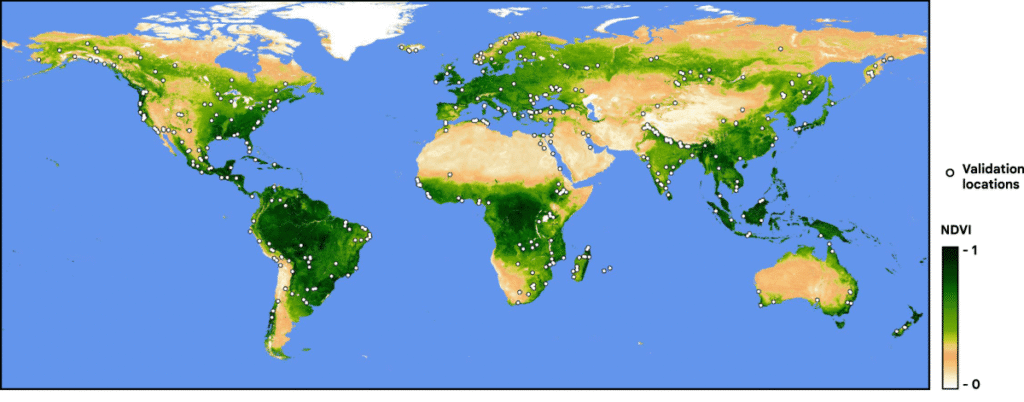
The Greenhouse Effect: Natural vs. Enhanced
Understanding the greenhouse effect is crucial for grasping global change mechanisms. The natural greenhouse effect is essential for life on Earth-without it, our planet’s average temperature would be about -18°C (0°F), making it largely uninhabitable.
How the Natural Greenhouse Effect Works:
- Solar radiation enters Earth’s atmosphere
- Earth’s surface absorbs this energy and warms up
- The warm surface emits infrared radiation (heat) back toward space
- Greenhouse gases in the atmosphere absorb some of this outgoing radiation
- These gases re-emit energy in all directions, including back toward Earth’s surface
- This process keeps Earth warm enough to support life
The Enhanced Greenhouse Effect:
Human activities have increased atmospheric concentrations of greenhouse gases, intensifying this natural process. The most important anthropogenic greenhouse gases include:
- Carbon Dioxide (CO₂): Primarily from fossil fuel combustion and deforestation
- Methane (CH₄): From agriculture, landfills, and natural gas production
- Nitrous Oxide (N₂O): From agricultural practices and fossil fuel combustion
- Fluorinated Gases: From industrial processes and refrigeration
Study Tip: Remember the acronym “MAIN” for the major greenhouse gases: Methane, ozone (tropospheric), Nitrous oxide, and CO₂. Each has different sources, atmospheric lifetimes, and warming potentials!
Feedback Loops: The Accelerators and Brakes of Global Change
Feedback loops are processes that can either amplify (positive feedback) or dampen (negative feedback) the effects of global change. Understanding these mechanisms is crucial for predicting future environmental conditions.
Positive Feedback Loops (Amplifying):
Ice-Albedo Feedback: As global temperatures rise, ice and snow cover decreases. Since ice reflects sunlight while dark surfaces absorb it, less ice means more heat absorption, leading to further warming and more ice loss.
Permafrost Carbon Feedback: Warming temperatures cause permafrost to thaw, releasing stored carbon as CO₂ and methane. These additional greenhouse gases cause more warming, leading to more permafrost thaw.
Water Vapor Feedback: Warmer air holds more water vapor, and since water vapor is a greenhouse gas, this additional moisture causes more warming.
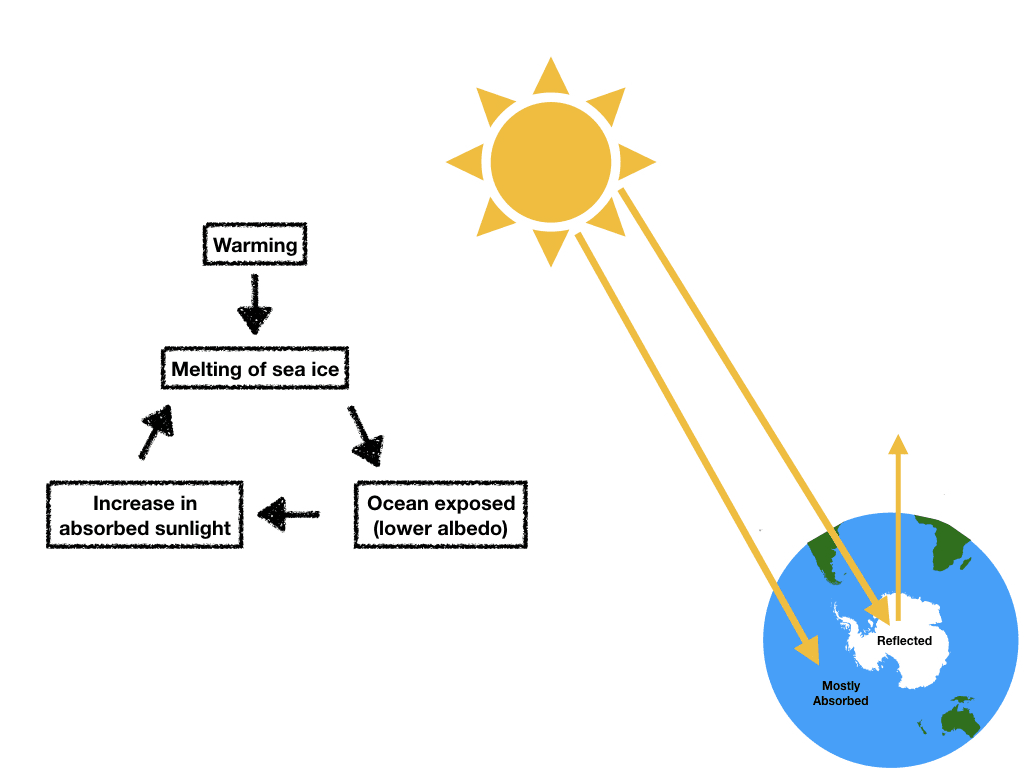
Negative Feedback Loops (Dampening):
Cloud Formation: Increased evaporation from warming can lead to more cloud formation, which reflects sunlight and has a cooling effect.
Carbon Fertilization: Higher CO₂ concentrations can enhance plant growth, potentially increasing carbon uptake from the atmosphere.
Tipping Points: When Gradual Change Becomes Rapid Transformation
Environmental tipping points represent thresholds beyond which relatively small changes can lead to dramatic, often irreversible shifts in system behavior. These concepts are crucial for understanding why global change can accelerate rapidly and why early action is so important.
Major Climate Tipping Points:
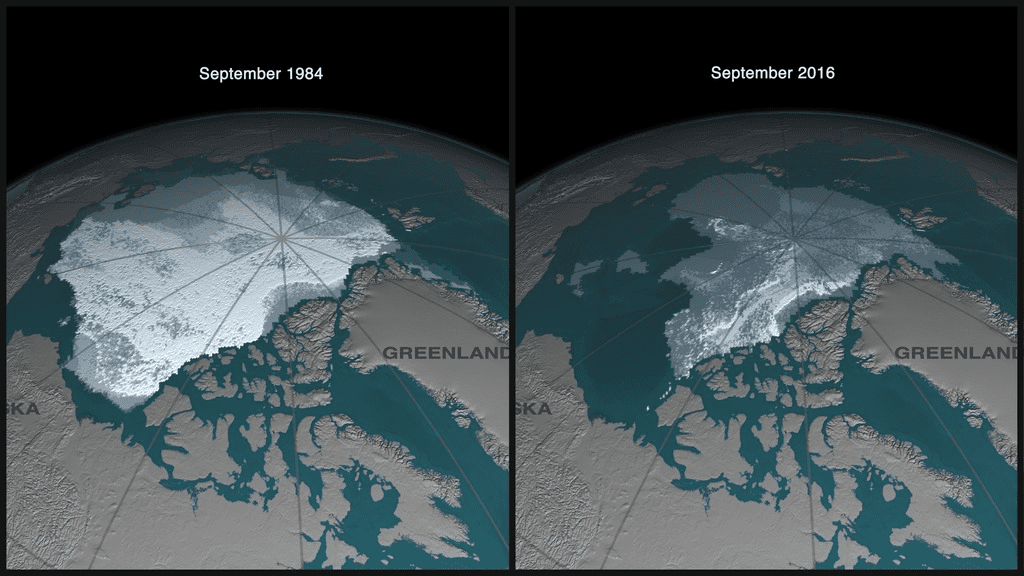
- Arctic Sea Ice Loss: Complete loss of summer Arctic sea ice
- Greenland Ice Sheet Collapse: Irreversible melting leading to significant sea level rise
- Amazon Rainforest Dieback: Transformation from carbon sink to carbon source
- Atlantic Meridional Overturning Circulation Shutdown: Disruption of ocean currents affecting global weather patterns
Study Strategy: For each tipping point, understand: (1) what triggers it, (2) what happens when it’s crossed, (3) how long the changes take, and (4) whether the changes are reversible.
Real-World Applications: Global Change in Action
Case Study 1: The Arctic – A Canary in the Coal Mine
The Arctic region is experiencing warming at twice the global average, a phenomenon known as Arctic amplification. This makes it an ideal laboratory for studying global change impacts and feedbacks.
Observable Changes:
- Sea ice extent has declined by approximately 13% per decade since 1979
- Permafrost temperatures have increased by 0.3°C per decade
- Growing season length has increased by 2-3 days per decade
- Vegetation is expanding northward and increasing in density
Cascading Effects:
The changes in the Arctic don’t stay in the Arctic. Sea ice loss affects global ocean circulation patterns, potentially influencing weather patterns in temperate regions. The “polar vortex” events that bring extremely cold weather to North America and Europe may be linked to Arctic warming.
Human Impacts:
Indigenous communities in the Arctic face significant challenges as traditional hunting and fishing patterns change. Infrastructure built on permafrost becomes unstable as the ground thaws, requiring expensive adaptations.
Case Study 2: Coral Reef Bleaching – Ocean Acidification and Warming in Action
Coral reefs, often called the “rainforests of the sea,” are experiencing unprecedented stress from multiple aspects of global change simultaneously.
The Bleaching Process:
- Rising ocean temperatures stress coral organisms
- Corals expel their symbiotic algae (zooxanthellae)
- Without these colorful algae, corals appear white or “bleached”
- If conditions don’t improve quickly, corals die
Ocean Acidification Impact:
As oceans absorb excess CO₂ from the atmosphere, seawater becomes more acidic. This makes it harder for corals and other marine organisms to build and maintain their calcium carbonate structures.
The Numbers Tell the Story:
- Ocean pH has decreased by 0.1 units since pre-industrial times (remember, pH is logarithmic, so this represents a 26% increase in acidity)
- The Great Barrier Reef has experienced five mass bleaching events since 1998
- Approximately 50% of shallow-water corals have been lost over the past 30 years
Ecosystem Services at Risk:
Coral reefs provide storm protection, support fisheries that feed over 500 million people, and generate billions of dollars in tourism revenue annually.
Case Study 3: Phenological Changes – When Timing Is Everything
Phenology is the study of seasonal biological events, such as flowering, bird migration, and insect emergence. Global change is disrupting these carefully timed natural events, with far-reaching consequences.
Spring Advancement:
Across the Northern Hemisphere, spring events are occurring 2-3 days earlier per decade on average. This might not sound like much, but in ecological terms, it’s enormous.
Mismatched Timing:
Different species respond to warming at different rates, leading to temporal mismatches:
- Birds may arrive at breeding grounds after peak insect abundance
- Pollinators may emerge before or after flowers bloom
- Predators and prey cycles become unsynchronized
Real Example – The Pied Flycatcher:
This European bird has not advanced its migration timing as much as the caterpillars it feeds its chicks. As a result, peak caterpillar abundance now occurs before the birds arrive, leading to reduced breeding success.
Case Study 4: Urban Heat Islands – Local Manifestations of Global Change
Cities experience their own unique form of climate change through the urban heat island effect, which is intensified by global warming.
Heat Island Formation:
- Dark surfaces (asphalt, concrete) absorb more heat than natural surfaces
- Reduced vegetation means less evapotranspiration cooling
- Waste heat from vehicles, buildings, and industry adds to warming
- Urban geometry traps heat and reduces air circulation
Amplified Impacts:
During heat waves, urban areas can be 5-7°C warmer than surrounding rural areas. As global temperatures rise, this urban warming is superimposed on top of broader climate change.
Environmental Justice Connections:
Lower-income neighborhoods often have less tree cover and more heat-absorbing surfaces, creating disproportionate health risks during extreme heat events.
Environmental Connections: Global Change and Earth’s Interconnected Systems
Understanding global change requires recognizing how it connects to every other topic you’ve studied in AP Environmental Science. These connections demonstrate the holistic nature of environmental science and help explain why global change is such a complex challenge.
Connections to Ecosystems and Biodiversity (Unit 2)
Global change is fundamentally altering Earth’s ecosystems and driving the sixth mass extinction. The connections are both direct and indirect:
Direct Effects:
- Temperature changes shift species’ suitable habitat ranges
- Precipitation changes affect ecosystem water balance
- Ocean acidification directly harms calcifying organisms
- Extreme weather events cause immediate mortality
Indirect Effects:
- Food web disruptions as species respond differently to change
- Habitat fragmentation as suitable areas shift and shrink
- Invasive species establishment in newly suitable areas
- Pollination network disruptions
Species Range Shifts:
As temperatures warm, many species are moving toward the poles and up mountainsides. However, this movement isn’t uniform-some species can’t move fast enough, barriers prevent movement, or suitable habitat doesn’t exist at higher latitudes or elevations.
Study Connection: Remember the r-selected vs. K-selected species from Unit 2? R-selected species (high reproductive rate, good dispersal) generally cope better with rapid environmental change than K-selected species (slow reproduction, specialized niches).
Connections to Population Dynamics (Unit 3)
Global change affects human populations in numerous ways, creating both challenges and opportunities for different regions and communities.
Climate Migration:
Environmental changes are already displacing human populations. Sea level rise threatens small island nations, droughts drive rural-to-urban migration, and extreme weather events create temporary or permanent displacement.
Agricultural Impacts:
Changing precipitation patterns, temperature extremes, and shifting growing seasons affect crop yields and food security. Some regions may benefit from longer growing seasons, while others face increased drought or flooding.
Connections to Energy and Matter (Unit 1)
Global change fundamentally alters the flow of energy and matter through Earth’s systems, connecting directly to the first principles you learned in APES.
Energy Balance Disruption:
The enhanced greenhouse effect changes Earth’s energy balance by trapping more outgoing longwave radiation. This seemingly small change (a few watts per square meter) has dramatic consequences when integrated over the entire planet.
Biogeochemical Cycle Alterations:
- Carbon Cycle: Human activities have moved carbon from long-term geological storage into the active atmosphere-ocean-biosphere system
- Nitrogen Cycle: Humans now fix more nitrogen than all natural processes combined
- Water Cycle: Warming intensifies evaporation and changes precipitation patterns
- Phosphorus Cycle: Increased weathering and erosion from extreme weather accelerates phosphorus movement
Connections to Water Resources (Unit 5)
Global change profoundly affects both water quantity and quality worldwide.
Hydrological Cycle Changes:
- Warmer air holds more moisture, intensifying both droughts and floods
- Mountain snowpack changes affect water supply timing
- Glacial melt provides short-term water increases followed by long-term decreases
- Groundwater depletion accelerates in drought-stressed regions
Water Quality Impacts:
- Higher temperatures reduce dissolved oxygen in water bodies
- Extreme precipitation events increase pollution runoff
- Sea level rise causes saltwater intrusion into coastal aquifers
- Algal blooms increase with warmer temperatures and nutrient pollution
Connections to Air Quality (Unit 7)
The interactions between global change and air quality create complex feedback loops and compound health risks.
Temperature-Pollution Interactions:
Higher temperatures accelerate the formation of ground-level ozone, making air quality worse even if pollutant emissions remain constant. This creates a double burden for urban areas already dealing with heat island effects.
Wildfire Smoke:
Climate change increases wildfire frequency and intensity, leading to more widespread air quality problems from smoke. Particulate matter from wildfires can travel thousands of miles, affecting air quality far from the fires themselves.
Current Research and Trends: The Cutting Edge of Global Change Science
Attribution Science: Connecting Events to Causes
One of the most rapidly advancing areas of climate science is extreme event attribution-determining how much human-caused climate change influenced specific weather events.
How Attribution Works:
Scientists use sophisticated climate models to compare the probability of an event occurring in two scenarios: the actual world with human influences, and a hypothetical world without them. This allows researchers to quantify how much climate change increased the likelihood or intensity of specific events.
Recent Attribution Findings:
- The 2021 Pacific Northwest heat dome was virtually impossible without climate change
- Hurricane Harvey’s rainfall was increased by 15-20% due to warming
- The 2019-2020 Australian bushfire season was 30% more likely due to climate change
Study Tip: Attribution science helps answer the common question “Is this weather event caused by climate change?” The answer is usually “Climate change didn’t cause it, but it made it more likely/intense.”
Artificial Intelligence and Climate Modeling
Machine learning and AI are revolutionizing how scientists study and predict global change.
Applications:
- Improving weather and climate prediction accuracy
- Analyzing satellite data to track deforestation and ice loss
- Identifying patterns in ecosystem responses to environmental change
- Optimizing renewable energy systems
Google’s AI Weather Prediction:
In 2023, Google’s AI system began outperforming traditional weather models for short-term forecasts while using 1000 times less computing power.
Nature-Based Solutions
There’s growing recognition that natural systems can be powerful tools for addressing global change.
Examples:
- Wetland Restoration: Provides flood protection while storing carbon
- Urban Green Infrastructure: Reduces heat island effects and stormwater runoff
- Regenerative Agriculture: Builds soil carbon while maintaining productivity
- Mangrove Conservation: Protects coastlines from storm surge while supporting biodiversity
Breakthrough Technologies
Several emerging technologies show promise for addressing global change challenges:
Direct Air Capture (DAC):
Technologies that remove CO₂ directly from the atmosphere are becoming more efficient and cost-effective, though they’re still energy-intensive and expensive.
Advanced Nuclear Power:
Small modular reactors and other advanced nuclear technologies could provide carbon-free baseload power to complement renewable energy.
Green Hydrogen:
Hydrogen produced using renewable energy could decarbonize heavy industry and transportation sectors that are difficult to electrify.
Social Tipping Points
Researchers are increasingly studying social tipping points—moments when small changes in social norms or policies can lead to rapid, large-scale transformations.
Examples:
- Rapid adoption of electric vehicles once they reach cost parity with gasoline cars
- Divestment movements accelerating the transition away from fossil fuels
- Changes in dietary preferences reducing meat consumption
Study Guide: Mastering Unit 9 for the AP Exam
Key Formulas and Calculations
1. Greenhouse Gas Warming Potential:
Global Warming Potential (GWP) = (Radiative forcing of gas × Atmospheric lifetime) / (Radiative forcing of CO₂ × Atmospheric lifetime of CO₂)
2. Carbon Footprint Calculations:
Total CO₂ equivalent = Σ(Activity × Emission Factor × GWP)
3. Sea Level Rise Components:
Total SLR = Thermal expansion + Glacial melt + Ice sheet loss + Land water storage changes
4. Temperature Anomaly:
Temperature Anomaly = Observed Temperature – Long-term Average Temperature
Study Tip: For the AP exam, focus on understanding what these formulas represent rather than memorizing exact numbers. You’ll be given necessary values in exam questions.
Essential Vocabulary with Memory Aids
Albedo: The reflectivity of a surface (remember: “Alba” means white in Latin – white surfaces have high albedo)
Anthropogenic: Caused by human activities (remember: “Anthropo” = human)
Phenology: The timing of seasonal biological events (remember: “Pheno” = appearance/phenomenon)
Radiative Forcing: The difference between energy absorbed and emitted by Earth (think: “forcing” a change in temperature)
Resilience: The ability of a system to recover from disturbance (remember: “bounce back”)
Vulnerability: The degree to which a system is susceptible to harm (opposite of resilience)
Conceptual Connections Map
To succeed on the AP exam, you need to understand how concepts connect:
Global Change Drivers → Environmental Impacts → Human Responses → Feedback Effects
Example pathway:
Fossil fuel combustion → Increased atmospheric CO₂ → Enhanced greenhouse effect → Rising temperatures → Ecosystem shifts → Agricultural impacts → Human adaptation/mitigation → Policy changes → Technology development → (back to) Reduced emissions
Common Exam Mistakes to Avoid
- Confusing weather and climate: Weather is daily conditions; climate is long-term patterns
- Thinking climate change means everywhere gets warmer: Some regions may cool due to circulation changes
- Forgetting about positive feedback loops: These amplify change and are crucial for understanding acceleration
- Mixing up mitigation and adaptation: Mitigation reduces causes; adaptation deals with effects
- Oversimplifying complex systems: Global change involves multiple interacting factors
Memory Techniques for Complex Processes
Ice-Albedo Feedback: “White reflects, dark absorbs, less white means more absorption”
Ocean Acidification Sequence: “More CO₂ → Lower pH → Harder shells → Ecosystem stress”
Tipping Points: Think of them like a seesaw – once you pass the balance point, the system tips to a new state
Practice Questions: Test Your Understanding
Multiple Choice Questions
1. Which of the following best describes a positive feedback loop in the context of global climate change?
a) Increased cloud cover reflecting more sunlight
b) Enhanced plant growth absorbing more CO₂
c) Melting permafrost releasing methane
d) Ocean uptake of atmospheric CO₂
e) Volcanic eruptions cooling the atmosphere
2. The enhanced greenhouse effect differs from the natural greenhouse effect primarily because:
a) It involves different types of radiation
b) Human activities have increased greenhouse gas concentrations
c) It only affects certain regions of Earth
d) It operates on shorter time scales
e) It involves only carbon dioxide
3. Which greenhouse gas has the highest global warming potential over a 100-year period?
a) Carbon dioxide (CO₂)
b) Methane (CH₄)
c) Nitrous oxide (N₂O)
d) Sulfur hexafluoride (SF₆)
e) Water vapor (H₂O)
4. Ocean acidification is primarily caused by:
a) Industrial pollution directly entering oceans
b) Increased ocean temperatures
c) Absorption of atmospheric CO₂ by seawater
d) Melting of polar ice caps
e) Agricultural runoff
5. Which of the following is an example of a climate tipping point?
a) A particularly hot summer
b) Complete loss of Arctic summer sea ice
c) A single severe hurricane
d) Annual variation in CO₂ concentrations
e) Seasonal temperature changes
6. The ice-albedo feedback loop is considered a positive feedback because:
a) It has beneficial effects on the environment
b) It amplifies the initial warming
c) It reduces global temperatures
d) It increases ice formation
e) It occurs only in polar regions
7. Phenological changes refer to:
a) Changes in species’ genetic makeup
b) Shifts in the timing of seasonal biological events
c) Alterations in ecosystem structure
d) Variations in atmospheric chemistry
e) Modifications in ocean currents
8. Which of the following best explains why the Arctic is warming faster than the global average?
a) The Arctic receives more solar radiation
b) Arctic ice reflects incoming solar energy
c) Arctic amplification through multiple feedback loops
d) The Arctic has more greenhouse gas emissions
e) Arctic ocean currents are warming
9. Carbon fertilization refers to:
a) Adding carbon dioxide to agricultural soils
b) Enhanced plant growth due to increased atmospheric CO₂
c) The process of photosynthesis
d) Fertilizer production using carbon compounds
e) Carbon storage in plant tissues
10. Which human activity contributes most to anthropogenic climate change?
a) Deforestation
b) Agriculture
c) Transportation
d) Fossil fuel combustion for electricity and heat
e) Industrial processes
Free Response Questions
Question 1 (10 points):
Global change affects marine ecosystems through multiple pathways. Choose ONE of the following impacts and explain its causes, effects, and potential solutions:
- Ocean acidification
- Sea level rise
- Marine heat waves
Your response should include:
(a) The primary cause(s) of this impact (2 points)
(b) Two specific effects on marine organisms or ecosystems (4 points)
(c) One example of how this impact affects human communities (2 points)
(d) Two potential mitigation or adaptation strategies (2 points)
Question 2 (10 points):
Feedback loops play a crucial role in global change processes.
(a) Define positive and negative feedback loops in the context of global change (2 points)
(b) Describe ONE specific positive feedback loop related to global warming, including all steps in the process (4 points)
(c) Explain why positive feedback loops make climate change more difficult to predict and manage (2 points)
(d) Identify ONE negative feedback loop and explain how it might slow global warming (2 points)
Question 3 (10 points):
Urban areas experience unique challenges related to global change.
(a) Explain how the urban heat island effect works (3 points)
(b) Describe how global warming amplifies urban heat island effects (2 points)
(c) Identify two populations that are most vulnerable to urban heat and explain why (3 points)
(d) Propose two urban planning strategies that could reduce heat island effects (2 points)
Answer Key and Explanations
Multiple Choice Answers:
- c) Melting permafrost releasing methane – This amplifies warming
- b) Human activities have increased greenhouse gas concentrations
- d) Sulfur hexafluoride (SF₆) – GWP of ~23,500 over 100 years
- c) Absorption of atmospheric CO₂ by seawater
- b) Complete loss of Arctic summer sea ice
- b) It amplifies the initial warming
- b) Shifts in the timing of seasonal biological events
- c) Arctic amplification through multiple feedback loops
- b) Enhanced plant growth due to increased atmospheric CO₂
- d) Fossil fuel combustion for electricity and heat
Free Response Sample Responses:
Question 1 – Ocean Acidification:
(a) Primary cause: Absorption of excess atmospheric CO₂ by seawater, forming carbonic acid
(b) Effects: Reduced ability of calcifying organisms to build shells/skeletons; disruption of food webs starting with pteropods and other small calcifiers
(c) Human impact: Decline in commercial fisheries and shellfish aquaculture
(d) Strategies: Reduce CO₂ emissions through renewable energy; establish marine protected areas to reduce other stressors
Conclusion: Your Role in Understanding and Addressing Global Change
Congratulations! You’ve just completed a comprehensive journey through AP Environmental Science Unit 9: Global Change. From understanding the fundamental science behind the enhanced greenhouse effect to exploring real-world case studies and practicing exam questions, you now have the knowledge and tools needed to excel on your AP exam and, more importantly, to be an informed citizen in an era of rapid environmental change.
As you continue your studies and prepare for the AP exam, remember that global change isn’t just an academic topic-it’s the defining environmental challenge of our time. The scientific concepts you’ve learned provide the foundation for understanding how human activities are reshaping Earth’s systems and what we can do about it. Whether you pursue a career in environmental science, policy, engineering, or any other field, this knowledge will serve you well.
Key Takeaways for Success:
- Global change involves complex, interconnected systems with multiple feedback loops
- Understanding both the science and the solutions requires thinking at multiple scales and timescales
- Real-world examples help illustrate abstract concepts and prepare you for application questions
- Practice with varied question types builds confidence and competence for the AP exam
Keep exploring, keep questioning, and remember that every generation has the opportunity to shape the future of our planet. Your understanding of global change science puts you in an excellent position to contribute to solutions that will benefit current and future generations.
Further Reading and Resources
To deepen your understanding of global change science and stay current with latest research:
- IPCC Reports (Intergovernmental Panel on Climate Change) – The most comprehensive scientific assessments of climate change
- NASA Climate Change and Global Warming – Excellent visualizations and data from space-based observations
- NOAA Climate.gov – User-friendly explanations of climate science with current data and trends
- Carbon Brief – Clear explanations of climate science research and policy developments
- Yale Climate Connections – Accessible articles connecting climate science to daily life
Remember, environmental science is a rapidly evolving field. Stay curious, stay informed, and never stop learning about our amazing, complex, and ever-changing planet!
Frequently Asked Questions
Q: How is global change different from climate change?
A: Global change is broader than climate change and includes all large-scale environmental changes on Earth, including alterations to land use, biodiversity, biogeochemical cycles, and atmospheric composition. Climate change is one important component of global change.
Q: Why do scientists focus on CO₂ when other greenhouse gases are more potent?
A: While gases like methane and nitrous oxide have higher warming potentials per molecule, CO₂ is most important because of its large quantities and long atmospheric lifetime (hundreds of years). CO₂ also makes up about 76% of all greenhouse gas emissions.
Q: Can natural climate variations explain current warming?
A: No. Scientists have extensively studied natural factors like solar variations, volcanic eruptions, and ocean cycles. While these do influence climate, they cannot explain the rapid warming observed since the mid-20th century. Only when human factors are included do climate models accurately reproduce observed warming.
Q: Are there any positive effects of global change?
A: Some regions may experience longer growing seasons or reduced heating costs, but the overwhelming scientific consensus is that the negative impacts far outweigh any benefits, especially as warming continues. Additionally, rapid change is generally more disruptive than gradual change, regardless of direction.
Q: What’s the difference between mitigation and adaptation?
A: Mitigation involves reducing the causes of global change (like reducing greenhouse gas emissions), while adaptation involves adjusting to the effects of global change (like building sea walls or changing crop varieties). Both strategies are necessary.
This comprehensive guide provides you with everything you need to master AP Environmental Science Unit 9: Global Change. Use it as a reference, study tool, and springboard for deeper exploration of these critical environmental topics. Good luck on your AP exam and in your future environmental endeavors!
Reccomended –